

F1
Was it the car or the driver?
4 November 2026
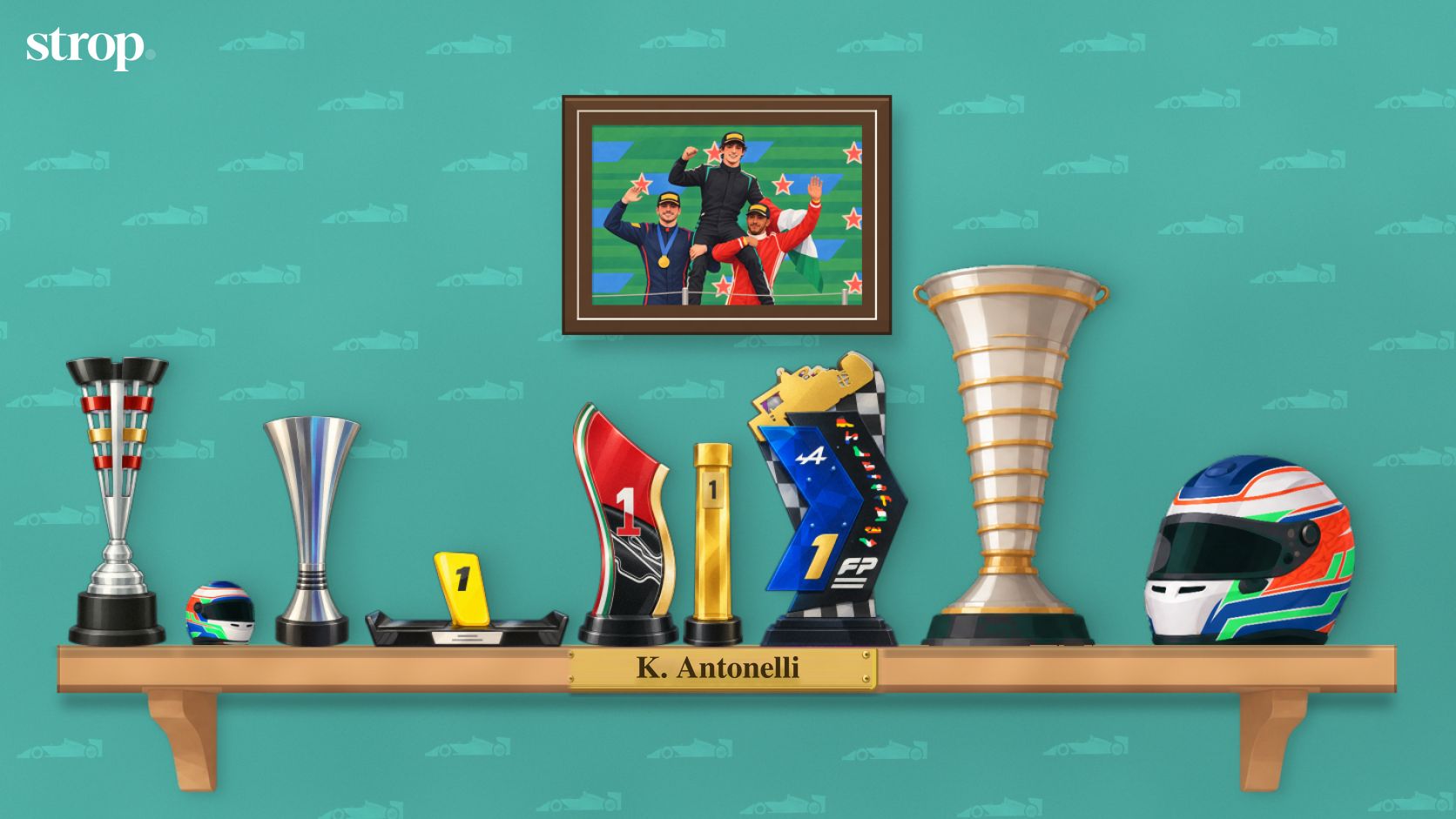
In today's Strop, we explain how much of Kimi Antonelli's record-breaking title came from his Mercedes and how much came from him, and how Formula 1 tells the two apart.
The Story
In Mexico City on Sunday afternoon, a 20-year-old in a silver Mercedes crossed the line in third place, and that was all he needed. Kimi Antonelli had to finish ninth or better to clinch the title, and he became Formula 1's youngest world champion, beating Sebastian Vettel's record by more than three years.
For many fans, the celebrations came with a familiar argument: Mercedes had the best car of the season. So was it the car or the driver that made the difference?
The short answer is both, but not in equal parts. The car made him a contender, and the driver did the rest. The longer answer shows how Formula 1 actually separates the two.
Start with history, because it is on the car's side. Since the teams' championship began in 1958, the drivers' champion has come from the title-winning team in 56 of 68 seasons. The exceptions are rare enough to be famous, such as James Hunt in 1976 and Max Verstappen in 2021. Simply put: most years, the best car wins.
This year, the best car was clearly the Mercedes. F1 rewrote its engine rules for 2026, and roughly half the power now comes from a battery that recharges every time the driver brakes. Mercedes got that recharging system right before anyone else. Think of a phone that charges faster than everyone else's. After Mexico, Mercedes led the constructors' table (the championship for teams) with 630 points, 126 ahead of Ferrari.
Here is the problem with stopping there. Every team has two drivers in identical cars, and the man in the other Mercedes is George Russell, a Grand Prix winner in his eighth F1 season. After Mexico, Antonelli has 380 points while Russell has only 250.
Same car, same team, same engineers, but a gap of 130 points. A win is worth 25 points, so that is more than five victories' worth, between two people who share everything except who is in the seat. In Formula 1, the teammate is the only fair measuring stick, and by that measure the driver mattered a great deal.
To be fair to Russell, not all of that gap is pace. In Mexico he started second, then lost places due to a poor start and an energy problem to finish only sixth. But bad luck explains a race or two, not five wins’ worth of gap. The team was also not playing favourites. Mercedes boss Toto Wolff put it simply: “We have two drivers, we don't have one.”
Think of two cousins in the same tuition class, with the same teacher and the same books. One just "does well", while the other tops the school. The class explains why both do well, but not why only one comes first.
So where did a 20-year-old learn to drive like a champion? Antonelli started karting at five in Bologna, where his father runs a racing team. Mercedes signed him into its young driver programme when he was about 12. He won two Formula 4 titles (the first step for single-seater racers) in 2022 and a Formula Regional title in 2023.
Then Mercedes took a big gamble. It skipped him past Formula 3 and put him straight into Formula 2, the last step before F1, where he finished sixth in 2024. Even before that season was over, Mercedes gave him Lewis Hamilton's seat at just 18. He crashed on his first practice outing at Monza, with plenty of people calling the move reckless.
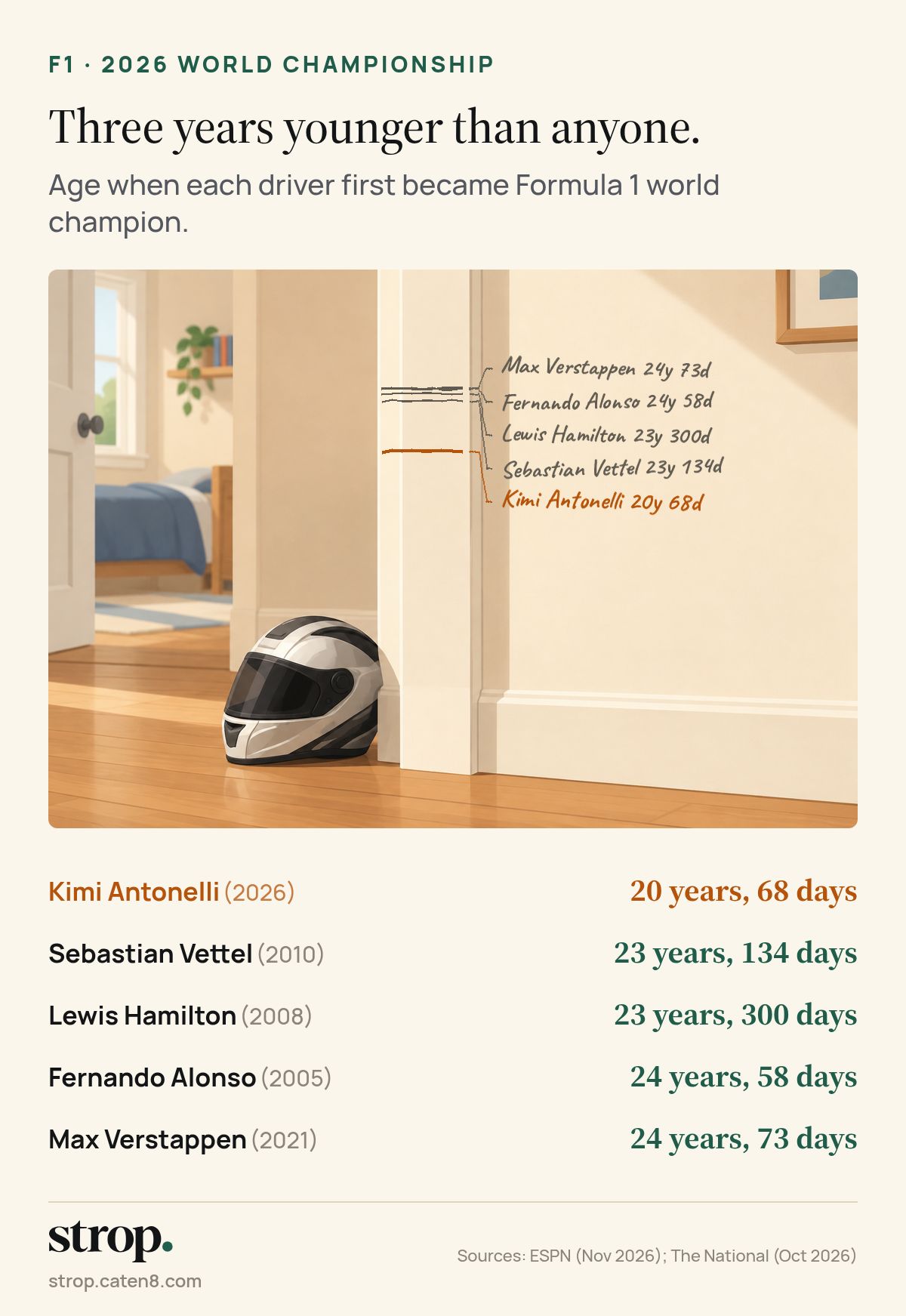
His rookie year in 2025 brought three podiums and seventh place. This year he became the youngest driver ever to start on pole, and at Monaco he took pole, the win and the fastest lap, all while leading every lap. On Sunday he was 20 years and 68 days old. The chart below shows how far he sits from the champions who came before him.
But there's a catch, and it is the man who won Sunday's race in Mexico. Max Verstappen has won three of the last four Grands Prix in a Red Bull and climbed to second in the standings. If a great driver like him can keep winning without the best car, some fans will ask how much of Antonelli's title came from the car.
Is that fair to Antonelli? Some say that any champion in the best car always carries an asterisk. Others say the rules reward the driver who beats everyone else in the same machinery, and the other Mercedes never came close. Both views fit the numbers, which is why the argument will run all winter.
For Indian fans, the story has one more edge. No Indian driver raced in Formula 1 this season. In all, India's two F1 drivers, Narain Karthikeyan and Karun Chandhok, started 57 Grands Prix between them. Antonelli's path, from karts at five to a factory team at 12, shows how early the climb begins.
Four races remain. Watch the gap to Russell. If it holds, the title belongs to the driver as much as the car. Then watch next season, when every team will be chasing Mercedes and a 20-year-old who will still be carrying the number twelve on his car.